1. Define the term 'pluralism' using APA referencing.
The theory of Pluralism is a multitude of groups, not the people as a whole, that govern the United States. These organizations which include among other unions, environmentalists, trade and professional associations, business and financial lobbies, civil rights activists, and formal and informal coalitions of like-minded citizens which have influenced the making and administration of laws and policies.
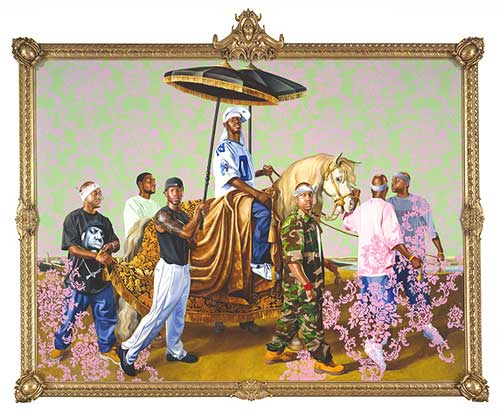
According to Caldwell (1999), Pluralism in art refers to the nature of artforms and artists as diverse(para1). It is emphasis on a single social and cultural group mixing by contemporary visual culture from other cultural and social groups.
2. How would you describe New Zealand's current dominant culture?
Throughout its time New Zealand, in the beginning, was firmly under Maori control, laws and culture. The current and past New Zealand government, tried to obtain most Maori tradition and give Kiwis the best possible resources. Wars in New Zealand are in the distance past, and everyone who lives here feels proud to be living in such a great country. New Zealand has become one of the world's top tourist attractions. There are two first languages, which are taught and spoken in schools. Although New Zealand did start off with native Maori, the european have dominated New Zealand. However I have noticed that in the past few years, there has been a huge effort to highlight the Maori culture and get the public more aware and involved.
3. Before 1840, what was New Zealand's dominant culture?
In 1840 The Treaty of Waitangi was signed, which was an agreement which formed contract or covenant between the Crown and Maori hapu, through their chiefs. According to JMR Owens, the cultural framework of New Zealand in 1840 was still essentially Polynesian, all European residents absorbed Maori values to some extent. However, some Europeans were incorporated, a tribal structure and the basic social divisions were coming into show. The treaty was signed to keep the Maori peoples rights. So in my opinion before, 1840 the dominant culture would have been the Europeans. The history of these years is of tribal societies interacting with each other and with European societies still being traditional but undergoing major cultural change(p.29).
4. How does the Treaty of Waitangi relate to us all as artists and designers working
in New Zealand?
Before the Treaty of Waitangi Maori had their own traditional art totern and Dance. It came as a culture shock for the artist and designers working in New Zealand at that time. Everyone respects their own culture and past, and how the culture changed and developed. I think the treaty influenced designers in two ways. Some would have been so upset about this treaty, they would be so focused on keeping their work pure to their people. And other designers would want to try merge the two cultures and create a whole new art era.
5. How can globalization be seen as having a negative effect on 'regional diversity' that leads to a 'homogenized world culture' in New Zealand in particular? (ALVC2 handbook page 52, http://searchcio.techtarget.com/definition/globalization)
To start off with, New Zealand is not an economic power country, national geographic position is different with the limited material and resources which led to the slow economic growth situation. For example, the globalization of the luxury product LV not everyone can afford, the main aspect should be Mass Market. On the other hand Globalization potentially causes New Zealand to lose Maori culture, instead of changing social morality. Nowadays, the younger generation prefer to watch American dramas and reality tv shows. Many people in New Zealand are unable to afford to live a 'luxury' life, but they still continue to follow the trends, due to the globalization change.
6. Shane Cotton's paintings are said to examine the cultural landscape. Research Cotton's work 'Welcome'(2004) and 'Three quarter view ' (2005) to analyze what he is saying about colonialization and the Treaty of Waitangi.

'Welcome' (2004) Shane Cotton
 | |||
|
http://www.nbr.co.nz/article/shane-cotton-paintings-examine-cultural-landscape-126412
Landscape references in Cotton’s early paintings recall the symmetry of Maori carving and the work of Colin McCahon. Simple images, sepia-coloured and scaled metaphorically, derive from nineteenth-century Maori Folk Art, which Cotton perceives as signifiers of Maori culture cleverly veiled within a Christian context. The works he did above tried to combine Maori and Pakeha sources to form a hybrid poetic painting that shows the shared experience of the two cultures within New Zealand. He questions the notion of cultural identity and the space between Maori and Pakeha perspectives.
The piece welcome by shane cotton is made up of very symbolic imagery. It is seen as a presence of death or "the goddess of death" in the Maori culture. In the piece 'Forked Tongue', Cotton uses very dark colours and imagery. This may reflect death and the blood that was spilt throughout the colonization between the Maori and the Europeans.
7. Tony Albert's installation 'Sorry' (2008) reflect the effects of colonization on the aboriginal people of Australia. Research the work and comment on what Albert is communicating through his work, and what he is referring to. Describe the materials that Albert uses on this installation and say what he hopes his work can achieve.
Tony Albert has captured this outpouring of emotion. He introduces us to a forest of faces, each sharing elements of history with those stolen from their people, land and culture. Each represents a false identity, manufactured black faces made to fit white society.
The artist also revels in the sense of irony in the work, with the impetus of such a momentous and joyous event being an apology. On yet another level, Albert presents us simply with a word — bold letters on a wall — indicative of an Indigenous Australian response to the apology. While it was an important symbolic gesture, many Indigenous Australians are waiting to see real change within society before fully accepting the Prime Minister’s apology and speech as more than words.It means four letters can mean all the difference in a moment of forgiveness.
8. Define the term 'kitsch'.
Kitsch is art (whether or not it is good art) that is deliberately designed to move us, by presenting a well-selected and perhaps much-edited version of some particularly and predictably moving aspect of our shared experience (Solomon, 454).
9. Explain how the work of both artists relates to pluralism.

Found kitsch objects applied to vinyl letters | 99 objects :
200 x 510 x 10cm (installed) | The James C Sourris Collection.
Purchased 2008 with funds from James C Sourris through the
Queensland Art Gallery Foundation | Collection: Queensland Art Gallery
The cultural context of art is all encompassing in its respect for the art of the world's cultures. They each use a combinations of cultures to display colonization and the issues that arise when two cultures collide.
References:
Solomon, Robert. "On Kitsch and Sentimentality." Journal of Aesthetics and Art Criticism 49 (Winter 1991): 1-14. http://qagoma.qld.gov.au/collection/indigenous_australian_art/tony_albert
http://www.kwintessential.co.uk/resources/global-etiquette/new-zealand.html
http://qag.qld.gov.au/collection/indigenous_australian_art/tony_albert
http://qag.qld.gov.au/collection/indigenous_australian_art/tony_albert
http://www.wallaceartstrust.org.nz/
http://eyecontactsite.com/2010/07/pondering-the-marks-and-symbols-of-shane-cotton
http://eyecontactsite.com/2010/07/pondering-the-marks-and-symbols-of-shane-cotton